
This week I had the opportunity to present new research at the annual conference of the International Communication Association (ICA) in Cape Town, South Africa. The paper examines how local councils in western Sydney communicate about heatwaves on social media and asks a simple but important question: when extreme heat strikes, what do institutions tell communities and how do people respond?
Heatwaves are one of Australia’s deadliest natural hazard, yet they often receive less attention than floods or bushfires. Unlike flames, smoke, or floodwaters, heat is largely invisible. For this reason, scholars have described heatwaves as a “hidden hazard”, a climate risk that is difficult to communicate and easy to normalise.
The study analysed social media posts published by western Sydney councils during major heatwave events. As providers of libraries, pools, community centres and other cooling infrastructures, councils play a unique role during periods of extreme heat. They are not only communicators of risk but also providers of practical adaptation resources.
Several patterns emerged from the analysis.
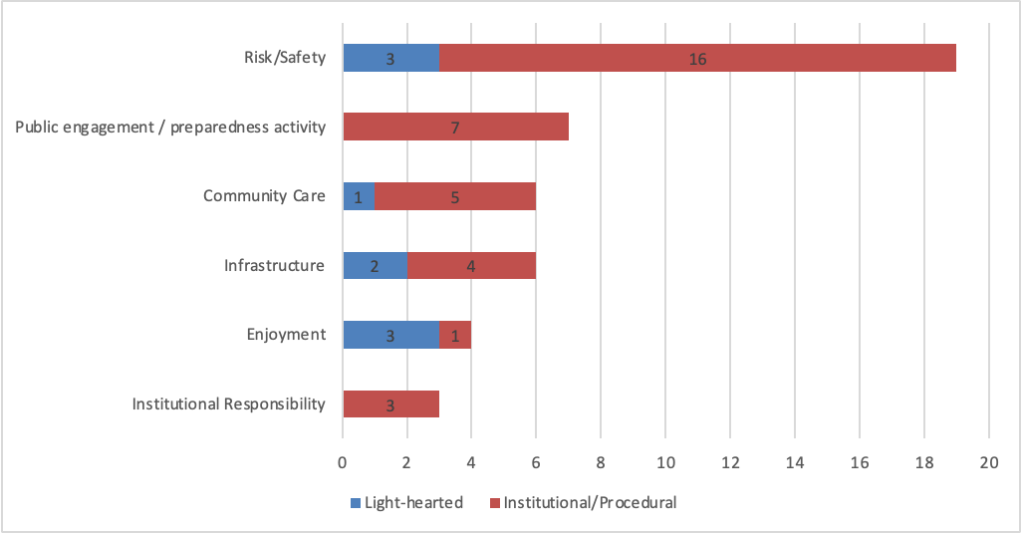
First, councils predominantly framed heatwaves through the lens of safety and preparedness. Posts commonly encouraged residents to stay hydrated, avoid outdoor activities during the hottest part of the day, and check on vulnerable family members and neighbours. Communication was generally practical, informative, and service-oriented.
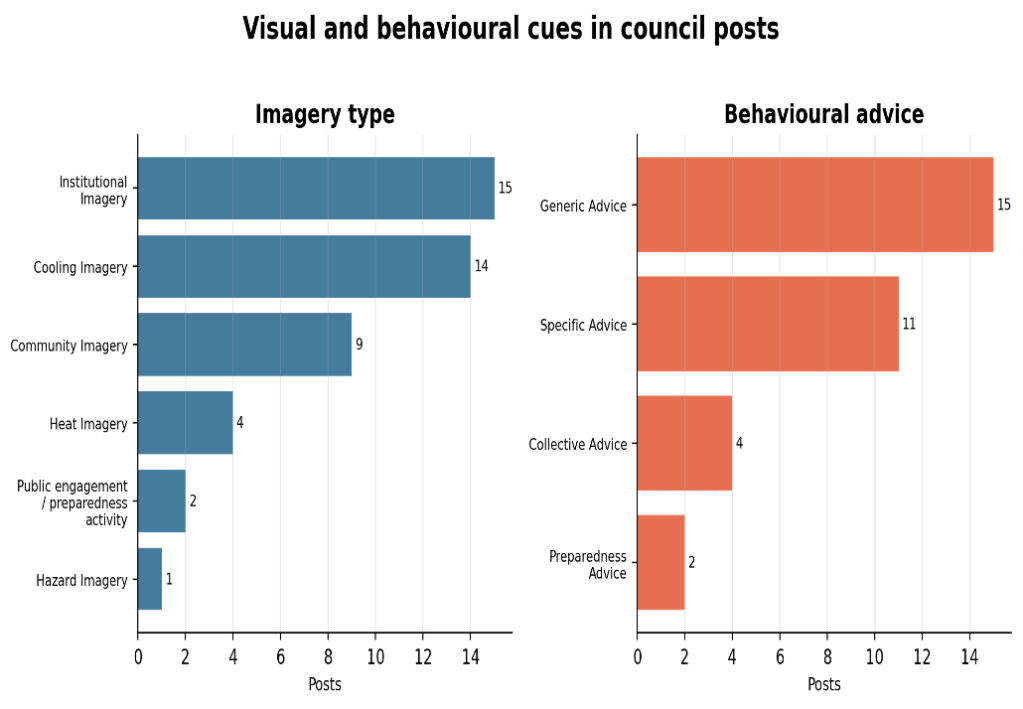
Second, visual communication often relied on images of cooling infrastructure, public facilities, pools, libraries, and community spaces rather than imagery emphasising danger or hazard. While these images provide useful information about available services, they may also contribute to presenting heatwaves as manageable inconveniences rather than significant climate risks.
Third, explicit references to climate change were rare. Most posts treated heatwaves as isolated weather events rather than manifestations of broader climatic trends. This finding raises important questions about the role of local institutions in connecting immediate risks to longer-term adaptation challenges.
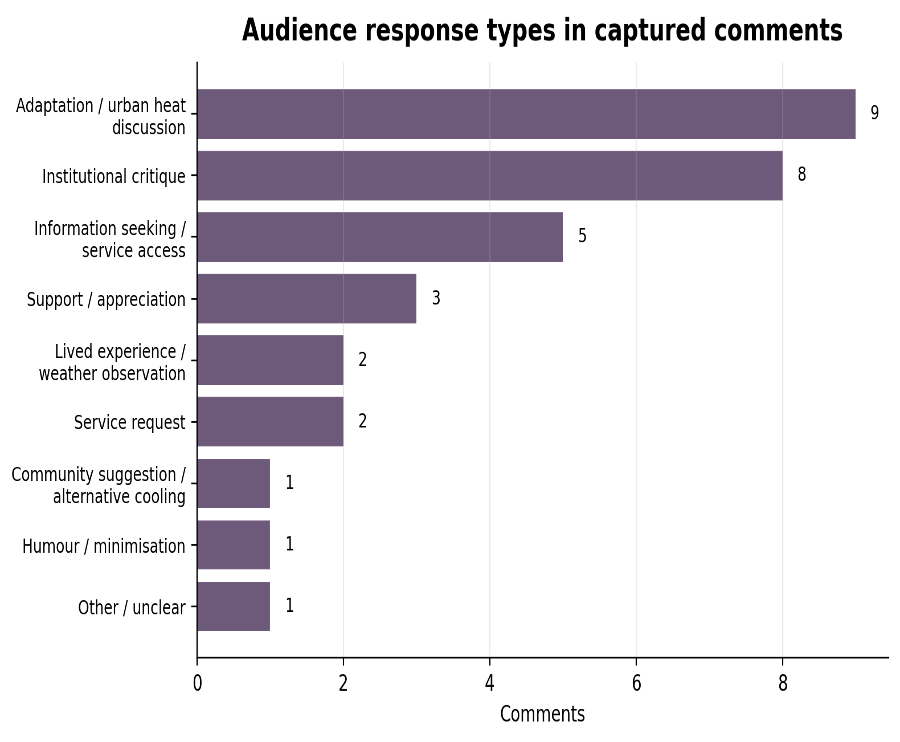
The analysis of audience responses revealed an equally interesting pattern. While comments rarely generated extensive discussions about climate change, residents frequently used council posts to seek information, request services, and discuss local adaptation measures such as tree canopy, shade, public cooling spaces, and access to facilities. In this sense, conversations often shifted from individual preparedness to questions of institutional responsibility.
One concept that informed the research is the idea of “teachable moments.” Extreme weather events can create temporary windows in which public attention to climate risks increases. The findings suggest that councils are effective at communicating immediate protective actions, but there may be opportunities to use these moments to foster broader conversations about urban heat, adaptation, and community resilience.
The research is still developing, but the presentation generated valuable discussion about the role of local government communication in a warming climate. As extreme heat becomes more frequent and intense, understanding how institutions communicate risk and how communities engage with those messages will become increasingly important.
You take a look at my slides here.


Leave a Reply